
Blog guide
Best Day and Time to Visit Daikoku PA in 2026
Published May 4, 2026 | By JDM Tokyo Tours
The single most common question from car enthusiasts planning a trip to Tokyo is some version of this: when should I go to Daikoku PA? The internet's answer is usually vague - weekends, late at night, it depends. That's not good enough when you've flown 10,000 miles for one evening.
Here is the definitive, practical guide to timing your visit to Daikoku PA - based on how the scene actually operates, not how travel bloggers describe it from a taxi window.
The Short Answer
Best day: Friday or Saturday night, arriving between 9pm and 10:30pm. Best months: October through March - cooler temperatures bring out more cars. Best special dates: 7's Day, July 7, 8's Day, August 6, R's Day, September 5, and the week of Tokyo Auto Salon in January. Worst time: Sunday evenings, weekday mornings, rainy nights, or any night with a major event elsewhere drawing the crowd away.
Why Timing Matters So Much at Daikoku
Daikoku PA is not a scheduled event. It's a spontaneous gathering - which means the crowd size, the quality of cars and the overall atmosphere can vary dramatically from one night to the next. The difference between a legendary Daikoku night and a disappointing one can come down to the day of the week, the weather, the season, and whether something else is happening in the area that night.
Understanding the rhythm of the spot is the difference between arriving at peak activity and arriving at an empty parking area with a few parked trucks.
Best Days of the Week
Friday night into Saturday morning is consistently the strongest evening at Daikoku. The working week is over, people have the following day free, and the combination of those two factors produces the highest attendance across all categories of enthusiast and vehicle.
Saturday night into Sunday morning is the second-best option. Slightly lower peak attendance than Friday in most cases, but still reliably active during the late-night hours.
Sunday evening sees significantly reduced activity. Most regulars have work on Monday. The crowd thins noticeably, and cars begin dispersing earlier.
Weekday evenings produce small, inconsistent gatherings at best. Without a specific themed event or special occasion, weekday nights at Daikoku tend to feel like a pale echo of weekend activity.
Best Time of Night
Daikoku PA is a night activity. Arriving in daylight or in the early evening means sitting in a mostly empty parking area.
Activity begins building around 9pm to 9:30pm as cars start arriving after dinner. By 10pm to 10:30pm the lot is typically at or near peak capacity on a good Friday or Saturday. The energy tends to hold until midnight to 1am, after which attendance begins to drop.
The most important caveat is police activity. Daikoku PA has a police station on the premises, and officers regularly disperse gatherings when they become too large or too loud - typically by 8:30pm to 9:30pm on nights when the crowd builds early and aggressively. When this happens, cars disperse to other spots - Tatsumi PA, Odaiba, the Wangan route - and a knowledgeable guide follows the scene rather than standing in an empty parking area.
Best Months and Seasons
October through February are the peak months for Daikoku PA activity. Cooler temperatures mean performance cars can be driven harder without overheating concerns, and the Japanese car enthusiast calendar tends to concentrate activity in the cooler half of the year.
January is exceptional because of Tokyo Auto Salon - Japan's largest custom car show, held at Makuhari Messe. The week of Auto Salon sees a massive influx of modified cars from across Japan, and Daikoku PA activity during this period is often the most extraordinary of the year.
Spring, March to May, brings pleasant conditions and solid activity, though cherry blossom season also brings large numbers of general tourists to Tokyo who may dilute the specifically automotive focus.
Summer, June to August, is generally the quietest season for Daikoku PA. Heat reduces performance car activity, and humidity discourages some of the late-night gathering culture. The exceptions are the special themed events.
Special Events and Themed Nights
The Japanese JDM calendar includes several significant annual events that produce exceptional Daikoku PA gatherings:
7's Day - July 7: An annual gathering for Mazda RX-7 owners. On 7/7, owners drive their FD and FC RX-7s to Daikoku for what becomes one of the most visually striking single-marque gatherings in the world. For rotary enthusiasts, this is essentially a pilgrimage.
8's Day - August 6: The equivalent event for Toyota AE86 owners - the Corolla Levin and Sprinter Trueno that became famous through Initial D. Arriving at Daikoku on 8/6 means being surrounded by the car that defined touge culture.
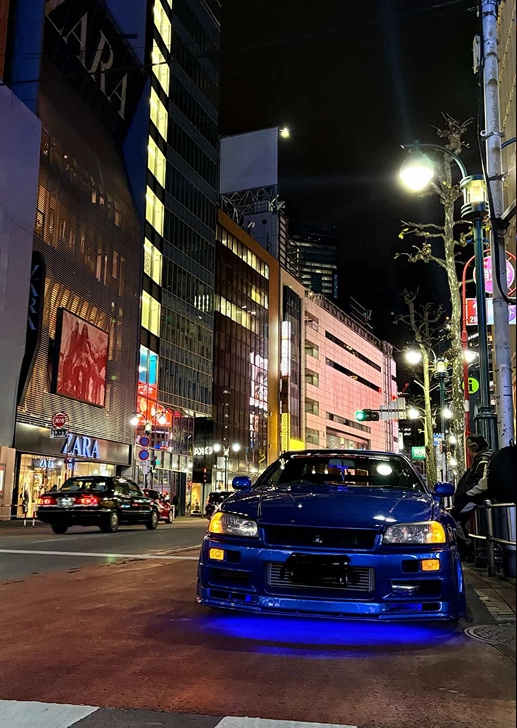
R's Day - September 5: Nissan Skyline GT-R owners gather, making this one of the highest-value nights for those specifically hoping to see R32s, R33s and R34s in concentration.
NSX Day and other marque gatherings occur at various points through the year. Following Japanese automotive social media accounts is the most reliable way to track specific gathering dates.
Weather and Daikoku PA
Rain significantly reduces Daikoku PA activity. Car owners don't bring their modified vehicles out in wet weather - water causes problems for lowered cars on highways, damages interior work, and creates conditions nobody enjoys.
Light rain can still produce some activity among the most dedicated regulars, but for a tourist hoping to see Daikoku at its best, a clear night is essential.
Temperature affects activity in the opposite direction from what you might expect - colder nights often produce more serious activity, as performance car owners take advantage of the cooler ambient temperatures.
The Police Shutdown Question
This is the question everyone asks and nobody wants to answer directly: what happens when police close Daikoku?
The honest answer is that police dispersal of Daikoku gatherings is regular and predictable. Officers from the on-site police station move through the lot, and gatherings that have grown too large or too loud are dispersed. This typically happens once or twice per evening on busy nights - not a single shutdown at the end of the night, but a rhythm of dispersal and regathering.
When Daikoku gets cleared, the scene moves. Cars go to Tatsumi PA, to the Wangan route, to Odaiba, to various other spots that experienced locals know are active. A guided tour doesn't end when Daikoku gets dispersed - it follows the scene wherever it goes.
Should You Visit Independently or With a Guide?
Visiting Daikoku PA independently requires a car, familiarity with Japanese highway tolls and navigation, the ability to time your arrival correctly and some knowledge of the social dynamics of the scene. For many tourists, none of these things are impossible - but combining all of them on a single evening in an unfamiliar city is a meaningful challenge.
A guided tour eliminates every one of these variables. The guide drives, knows the timing, knows what to do when Daikoku gets shut down, speaks Japanese and can introduce you to car owners. For most international tourists, this is simply the more reliable way to have a great evening.
JDM Tokyo Tours departs from Akihabara in central Tokyo and covers Daikoku PA, Tatsumi PA and the Wangan route in a single evening. Up to 3 guests per car, JPY 90,000 per car.
Quick Reference - Best Times at Daikoku PA
| Variable | Best option |
|---|---|
| Day of week | Friday or Saturday |
| Time of arrival | 9:30pm - 10:30pm |
| Season | October - February |
| Best single month | January, Auto Salon week |
| Best special date | 7's Day, Jul 7; R's Day, Sep 5; 8's Day, Aug 6 |
| Weather | Clear, cool, dry |
| Avoid | Sunday, rain, summer weekdays |
For a guided Daikoku PA night tour from Akihabara, Tokyo - DM @jdmtokyotours on Instagram. We know the timing, we follow the scene, we speak English.