
Blog guide
How to Visit Daikoku PA from Tokyo (And What to Expect When You Get There)
Published April 13, 2026 | By JDM Tokyo Tours
Daikoku Parking Area has a reputation that travels. Car enthusiasts who have never been to Japan still know the name. They have seen the footage: Skyline GT-Rs lined up under fluorescent lights, crowds gathering at midnight, and builds you would never find outside of Japan. The real question is not whether it is worth visiting. It is how you actually get there.
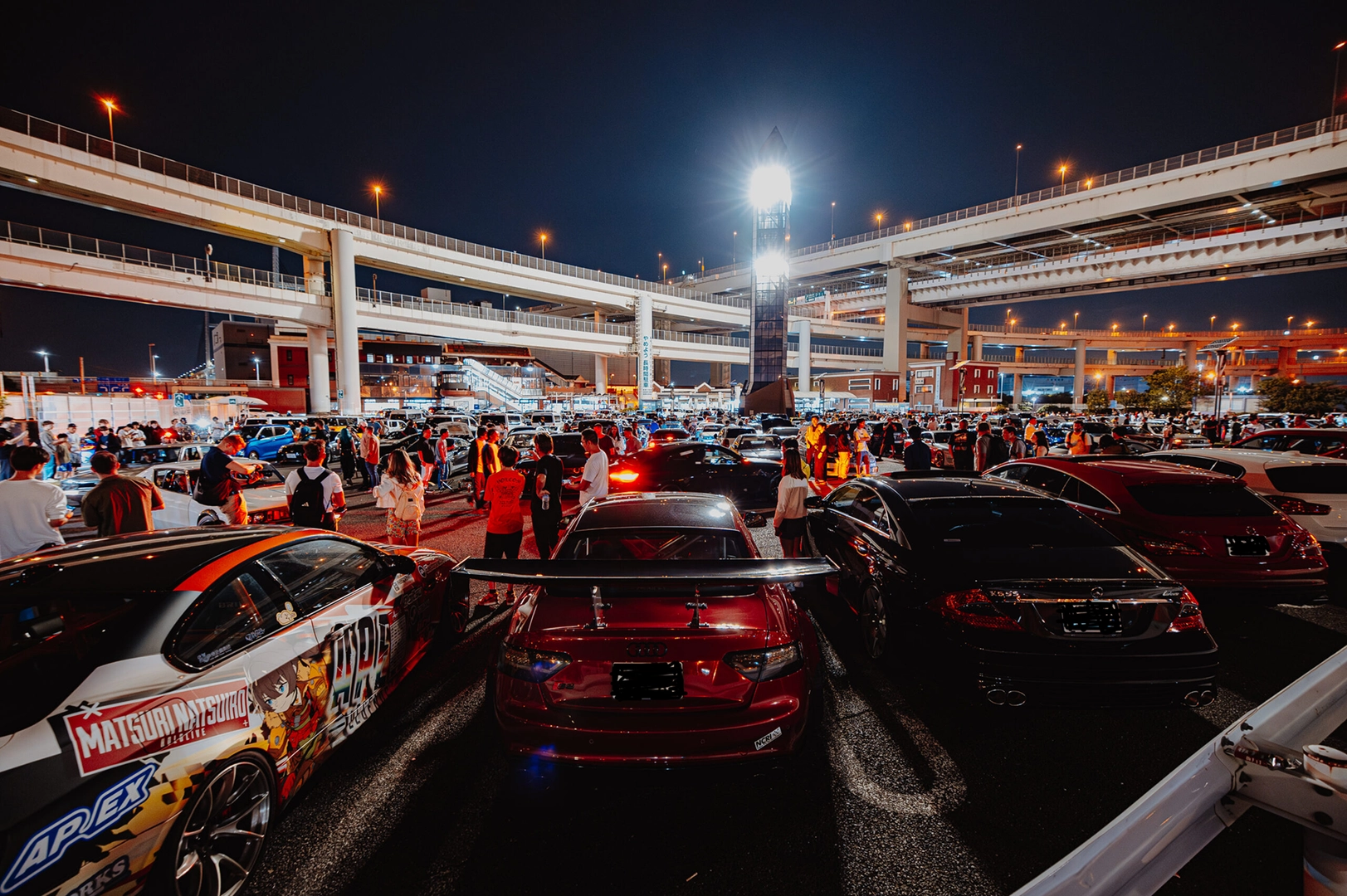
Why Daikoku PA Is Harder to Reach Than It Looks
Daikoku PA sits on the Kanagawa side of Tokyo Bay, accessible via the Shuto Expressway. That last detail matters more than most travel guides let on. There is no train station nearby, no pedestrian access from the surrounding area, and no bus route that drops you at the entrance. You need a car to get in, which means renting one, arranging a driver, or joining a guided experience with someone who already knows the route.
For international visitors without a Japanese driving license conversion or an International Driving Permit, self-drive becomes complicated fast. Navigation on the Shuto expressway system is also genuinely tricky at night. The interchanges are stacked, the signage shifts quickly, and missing the right exit at speed can put you a long way from where you meant to be.
What the Lot Actually Looks Like
Daikoku PA is a rest area on the expressway, not a dedicated event venue. The cars gather there because the lot is large, the location works for the broader Tokyo Bay highway network, and the culture has built up over decades.
On a strong night, you may see GT-Rs, Supras, RX-7s, NSXs, Evolutions, S-chassis builds, and cars that are harder to categorize cleanly. On a slower night, it is still more interesting than most parking areas anywhere in the world.
The atmosphere is informal. People drift between cars, conversations happen across language barriers through shared gestures at engine bays, and the timeline is loosely shaped by when the crowds arrive and when attendants eventually clear the lot. Weekends after midnight in fair weather usually give you the best odds, but there are never guarantees.
Getting There as an International Visitor
The most practical option for visitors without a car is a guided night drive that includes Daikoku PA as part of the route. That solves transportation, timing, and local judgment at the same time.
JDM Tokyo Tours' Daikoku PA Night Tour runs private guided drives from Akihabara through the Shuto network, covering the C1 highway, Rainbow Bridge, and Wangan before ending at Daikoku PA. Groups are kept to a maximum of three people per car, guides are English-speaking, and the route can adjust based on what is actually happening that night.
Tours are available daily from 18:00, and weekday night pricing starts at JPY 90,000 per car. That private format matters because it allows the night to react to traffic, lot conditions, and turnout instead of forcing a fixed script when the scene changes.
The Difference Between Arriving and Actually Being There
Daikoku PA is one of those places where the experience depends heavily on context. You can physically get there and still miss most of what makes it interesting if you do not know which cars to study, when the lot is peaking, or how the culture around the meet actually works.
A good guide changes that. It is the difference between arriving at a show and understanding what you are seeing: who built what, what generation that engine is from, and why a certain combination of parts is unusual. For visitors who have been following Japanese car culture online for years, that context is what makes the night worth the trip.
How to Book
If Daikoku PA is the main reason for your Tokyo night out, say that upfront when you contact the team. The cleanest booking path is to message @jdmtokyotours on Instagram with your dates, group size, and whether you want a standard night drive or a more custom route. Replies usually come back within 24 hours, and the timing can then be shaped around the strongest window for Daikoku.