
Blog guide
Japan Tours - The Most Unique Experiences Beyond the Usual Itinerary
Published June 29, 2026 | By JDM Tokyo Tours
Most Japan itineraries follow the same template. Tokyo for three days. Bullet train to Kyoto. Day trip to Nara. Osaka food scene. Mount Fuji if the weather holds. It's a good itinerary - these are genuinely extraordinary places. But it's also the same itinerary that millions of people have taken before you.
This guide is for travellers who want those experiences and one or two that nobody else from their office has done. The experiences that produce stories rather than photographs that look like everyone else's.
Japan's Standard Itinerary Is Good For a Reason
Before departing from convention, acknowledge why the convention exists. Japan's major tourist circuit - Tokyo, Kyoto, Nara, Osaka, Hiroshima, Miyajima - contains some of the most extraordinary cultural experiences available anywhere.
Kyoto's Fushimi Inari, the mountain path through thousands of torii gates, is as good as it looks. The Nishiki Market food experience is genuinely excellent. The Bamboo Grove in Arashiyama, however crowded, is worth seeing. Hiroshima's Peace Memorial Museum is one of the most important places any tourist can visit in their lifetime.
Keep these. Add to them.
Uniquely Japanese Experiences That Go Deeper
Staying in a Ryokan
A traditional Japanese inn - tatami floors, futon on the floor, communal or private onsen, formal kaiseki dinner served in your room - is one of the most distinctly Japanese experiences available to tourists. The difference between a ryokan stay and a hotel stay in Japan is the difference between visiting a country and briefly inhabiting it.
Ryokans range from budget to extraordinary. Hakone, Kinosaki Onsen, Nikko and the Izu Peninsula all have excellent options at various price points. A single night in a good ryokan with dinner and breakfast included typically costs JPY 25,000-60,000 per person - significant, but one of the best value experiences in Japan given what it includes.
A Noh or Kabuki Performance
Noh and Kabuki are Japan's classical theatrical forms - both extraordinary, both accessible to non-Japanese speakers with some preparation. Tokyo's National Theatre, the Kabukiza in Ginza and various regional venues offer performances year-round. Single-act tickets for Kabuki are available at some venues, allowing you to experience the art form without committing to a full four-hour performance.
The Ichi-go Ichi-e Principle in Practice
Japanese culture has a concept - ichi-go ichi-e, "one time, one meeting" - that applies to experiences: this moment will never occur again, so be fully present for it. The experiences that most embody this in Japan are spontaneous and unrepeatable: a particular temple at a particular hour in a particular season, a conversation in a bar in a language you don't share, arriving at a place at the moment when it reveals itself completely.
The car culture at Daikoku PA, described below, is an excellent example of ichi-go ichi-e in practice. It happens because people show up. It dissolves when they leave. No two nights are the same.
Uniquely Japanese: The JDM Car Culture Experience in Tokyo
Japan's automotive culture is one of its most distinctive exports and least understood tourist experiences. The country that produced the Nissan Skyline GT-R, the Toyota Supra, the Mazda RX-7 and the Honda NSX didn't just build iconic cars - it built an entire culture around them that continues to operate in Tokyo today in ways that are completely inaccessible to most international tourists.
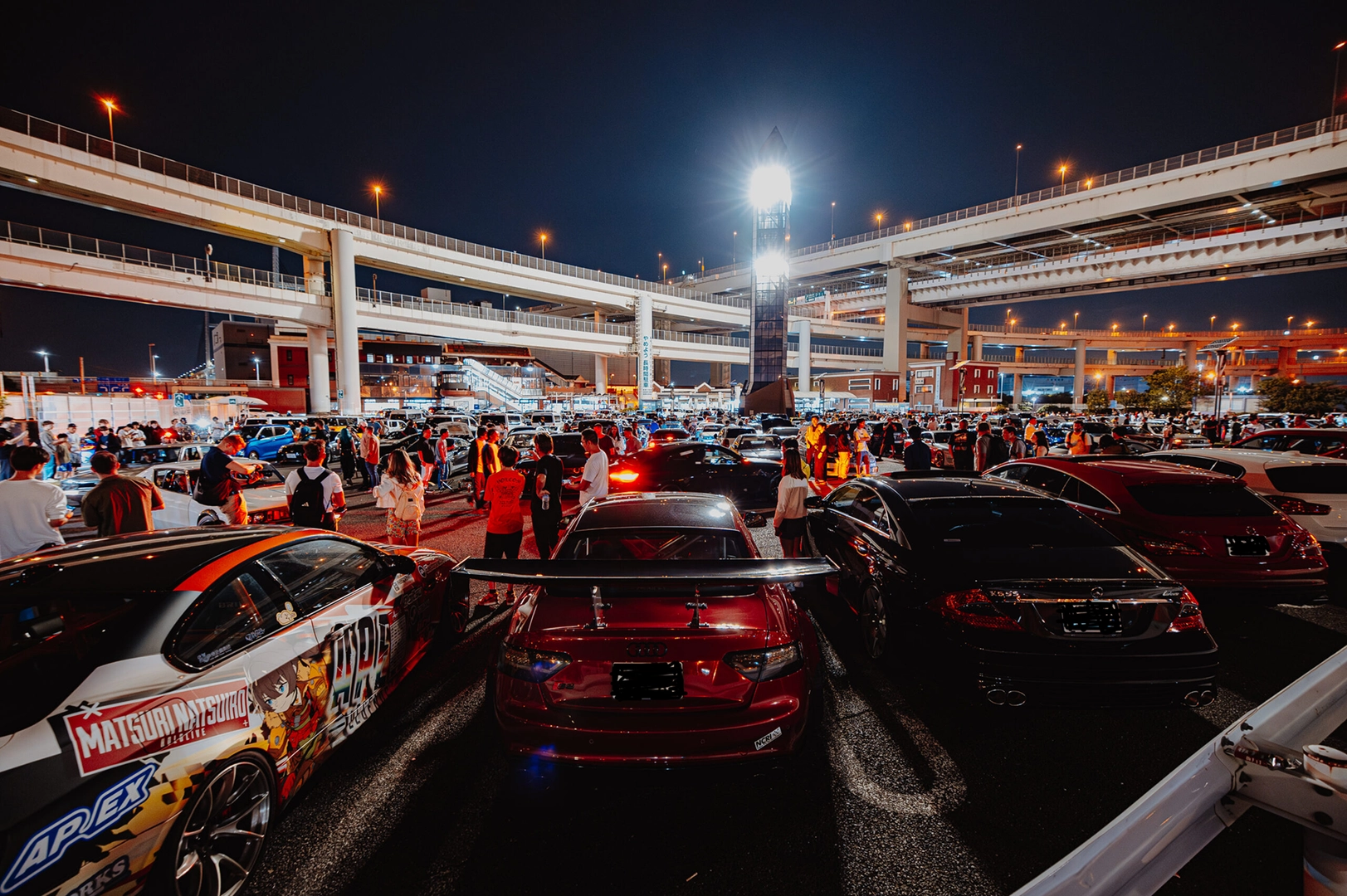
Daikoku Parking Area in Yokohama is the centre of this culture. On Friday and Saturday nights, hundreds of modified and original Japanese sports cars gather at this highway interchange in a spontaneous gathering that has been happening for decades. Rare R34 GT-Rs. Heavily modified FD RX-7s. Factory-spec NSXs that haven't turned a wheel on a track but have been maintained by their owners with extraordinary care. The atmosphere - the sound, the light, the social dynamics of a community that exists purely because of shared love for extraordinary machines - is unlike anything in conventional tourism.
The access problem for tourists: Daikoku PA is on a highway interchange. There is no train. Pedestrians cannot enter. The site has a permanent police presence and the gatherings get dispersed with regularity. Without a car and local knowledge, you cannot meaningfully experience this.
JDM Tokyo Tours provides the solution. Departing from Akihabara in central Tokyo, they take small groups of up to three guests to Daikoku PA, Tatsumi PA and the Wangan Bayshore Route - the elevated highway along Tokyo Bay that is itself one of the most atmospheric drives in the world - in a real JDM vehicle, guided by someone who is an active participant in the local car scene.
This experience works for dedicated car enthusiasts. It also consistently works for partners who were persuaded to come and expected to be bored. The scale and specificity of what happens at Daikoku PA at midnight is impressive regardless of prior automotive knowledge. It's one of those Tokyo experiences that generates ichi-go ichi-e in the most literal sense - this specific gathering of specific cars on this specific night will never happen again exactly this way.
Pricing: JPY 90,000 per car for up to 3 guests, approximately $600 USD flat rate. Book via Instagram @jdmtokyotours.
Planning a Japan Tour That Goes Beyond the Template
Extend Tokyo. Most first-time Japan itineraries allocate three days to Tokyo. Five or six is better. The city has layers that don't reveal themselves in a long weekend, and the most memorable experiences often happen in the gaps between planned activities.
Slow down in one place. Japan rewards slow travel. A week in Kyoto produces a qualitatively different understanding than two days. A ryokan stay of two nights instead of one allows you to actually settle into the pace of the place rather than treating it as accommodation.
Follow a specific interest deeply. Japan is exceptional at depth in any direction. If you love ceramics, the ceramic regions of Aichi and Saga will give you experiences that three hundred miles of general sightseeing can't match. If you love whisky, the distilleries of Hokkaido and the Nikka facilities outside Sendai are destinations. If you love car culture, the Tokyo nightlife described above is incomparable.
Book the access-dependent experiences first. Ghibli Museum, certain ryokan properties, TeamLab installations, and the JDM night tours on specific dates like 7's Day on July 7 and R's Day on September 5 have genuine capacity limits and book out. Lock them in before building the rest of the itinerary around them.
Travelling to Japan? JDM Tokyo Tours offers the most unique night experience in Tokyo. Akihabara, Tokyo. JPY 90,000 per car, up to 3 guests. Book via @jdmtokyotours on Instagram.