
Blog guide
Tokyo Hidden Gems — 12 Places Most Tourists Never Find (2026)
Published August 10, 2026 | By JDM Tokyo Tours
1
Tokyo Hidden Gems — 12 Places Most Tourists Never Find Every city's "hidden gems" list eventually becomes not-hidden through repetition — this one tries to actually earn the title. These are places genuinely underrepresented in mainstream Tokyo coverage, ranging from quiet neighbourhood corners to one experience that's hidden not by obscurity but by pure logistics.
- Yanaka Ginza and the Cat Alleys
Yanaka survived both the 1923 earthquake and WWII bombing largely intact, making it Tokyo's best-preserved old neighbourhood. Yanaka Ginza's shopping street, the sprawling Yanaka Cemetery, and the area's famous population of neighbourhood cats create a version of Tokyo that feels a century removed from Shibuya, a 20-minute train ride away.
- Todoroki Valley
A genuine ravine — bamboo groves, a stream, a small temple — sitting inside Setagaya ward, fifteen minutes from Shibuya by train. Tokyo's ability to hide real nature within its density is nowhere more surprising.
- Nezu Shrine's Torii Tunnel
Everyone knows Fushimi Inari's thousand torii gates in Kyoto. Far fewer know Nezu Shrine in Tokyo has its own smaller, quieter tunnel of vermillion gates — genuinely atmospheric, rarely crowded, and a fraction of a mile from Ueno Park.
- Kagurazaka's Hidden Alleys
Once Tokyo's premier geisha district, Kagurazaka retains cobblestone alleys, traditional ryotei restaurants and a distinctly Franco-Japanese character (a significant French expat community settled here decades ago). Wander without a map — the alleys reveal themselves.
- Meikyoku Kissa Lion
A classical-music listening café in Shibuya, operating since 1926, where conversation is actively discouraged and vinyl recordings of orchestral works play on a serious sound system. One of the strangest, most transporting hours available in the middle of Tokyo's busiest district.
- Shimokitazawa's Theatre and Record Scene
Known for vintage shopping, Shimokitazawa's deeper layer is its small independent theatres and record stores — genuine counterculture that's been operating since the 1970s, largely untouched by the district's growing popularity with tourists.
- Depachika Food Halls
The basement floors of major department stores (Isetan Shinjuku, Mitsukoshi Ginza) function as extraordinary food museums — everything from ¥10,000 melons to perfectly composed bento, available for purchase, browsable like a gallery.
- Kappabashi Kitchen Street
The professional restaurant-supply district between Ueno and Asakusa — hand-forged knives, ceramic ware by the crate, and the famous plastic food samples seen in restaurant windows across Japan, sold here at the source.
- Koenji
West of Shinjuku, Koenji retains a genuinely alternative, unpolished energy — vintage clothing warehouses, punk and jazz venues, and a population of artists and musicians that gives the neighbourhood a texture entirely different from central Tokyo's polish.
- Gotokuji Temple — The "Original" Lucky Cat Temple
The temple claimed as the origin of the maneki-neko (beckoning cat) figure, with hundreds of small cat statues arranged throughout its grounds. Genuinely photogenic, genuinely obscure, and a 20-minute train ride from Shibuya.
- Sento Bathhouses Outside the Tourist Circuit
While onsen ryokans get all the attention, ordinary neighbourhood sento (public bathhouses) — often decorated with painted Mount Fuji murals — offer the same ritual at a fraction of the price and with zero tourist presence. Kodai-yu in Adachi is a classic example.
- Daikoku Parking Area — Hidden by Logistics, Not Obscurity
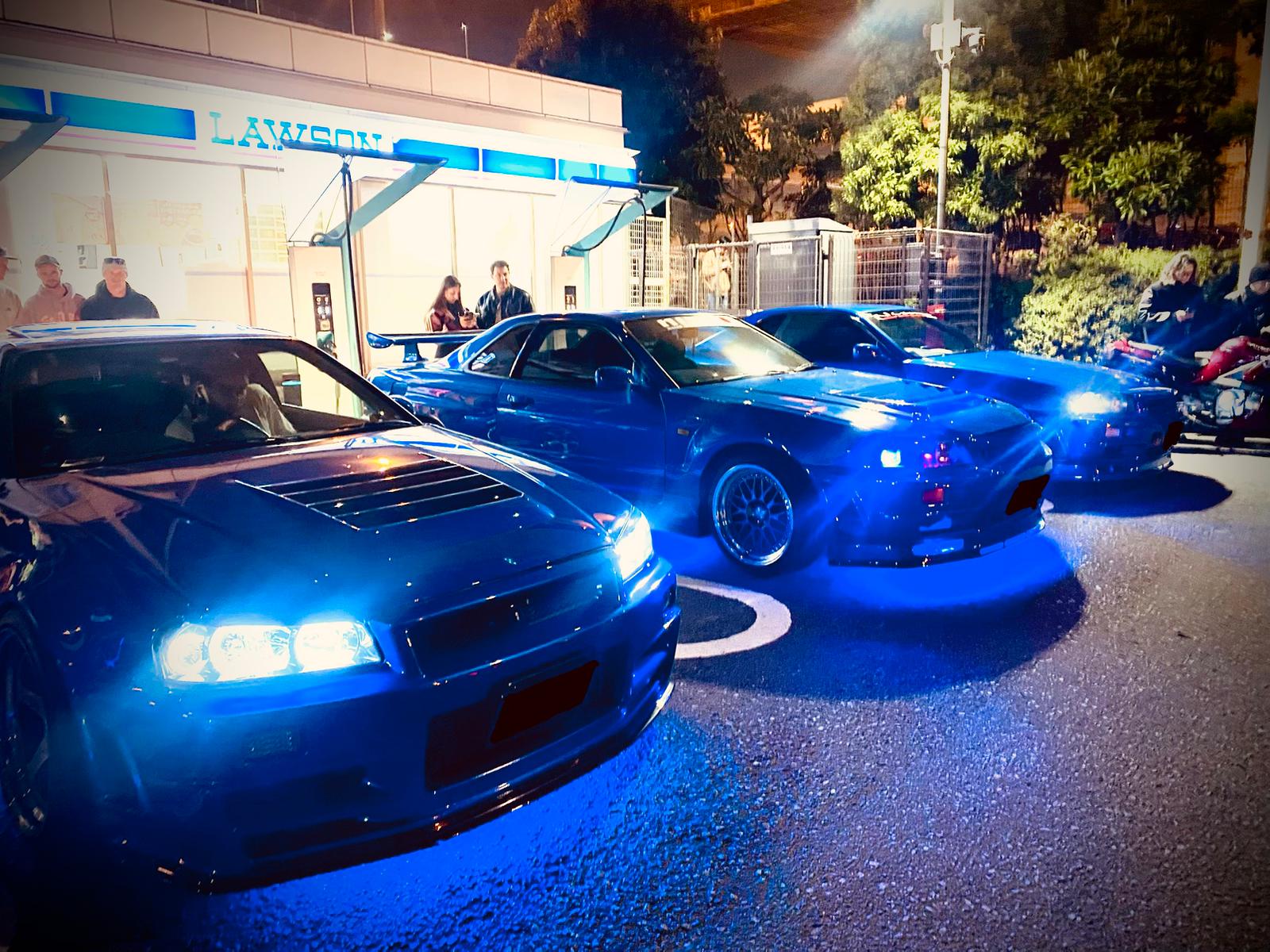
This is the strangest entry on the list because it's not secret at all within Japanese car culture — it's globally famous among enthusiasts. But it's genuinely invisible to almost every general tourist, for one specific reason: it cannot be reached without a car. Daikoku PA sits on a highway interchange near Yokohama. No train service exists. Pedestrians cannot legally enter. Every Friday and Saturday night, without any organisation or ticketing, hundreds of rare Japanese sports cars gather here — R34 GT-Rs, Mk4 Supras, rotary RX-7s — in what's arguably the most extraordinary spontaneous automotive gathering anywhere in the world. It's a hidden gem purely through inaccessibility. Most Tokyo guidebooks don't mention it because most of their readers physically cannot get there. JDM Tokyo Tours exists specifically to solve this — a private guided night tour from Akihabara, in a real JDM sports car, with an English-speaking local guide, covering Daikoku PA, the Wangan highway and Tatsumi PA in one evening. Of everything on this list, it's the one most likely to become the story you tell when someone asks about your trip.
Making These Fit Your Trip Most of this list clusters loosely by geography: Yanaka, Nezu Shrine and Ueno work as one relaxed morning. Shimokitazawa, Koenji and Gotokuji form a west-side afternoon. Kagurazaka and a sento evening pair naturally. Daikoku PA stands alone — it requires its own evening, ideally a Friday or Saturday, booked in advance.
Tokyo's most hidden gem, solved: JDM Tokyo Tours, private night tours from Akihabara. ¥90,000 per car, up to 3 guests. Instagram @jdmtokyotours.