
Blog guide
Tokyo Group Tours - The Best Small Group Experiences in Japan
Published June 22, 2026 | By JDM Tokyo Tours
Group tours in Tokyo range from the excellent to the genuinely disappointing, and the difference is rarely obvious from the booking page. A large bus carrying 40 tourists to the same temple at the same time as three other buses is technically a group tour. So is an intimate evening with two other travellers in the back of a GT-R heading to the most famous car meet in Japan.
These experiences are not comparable, and this guide is about finding the second kind.
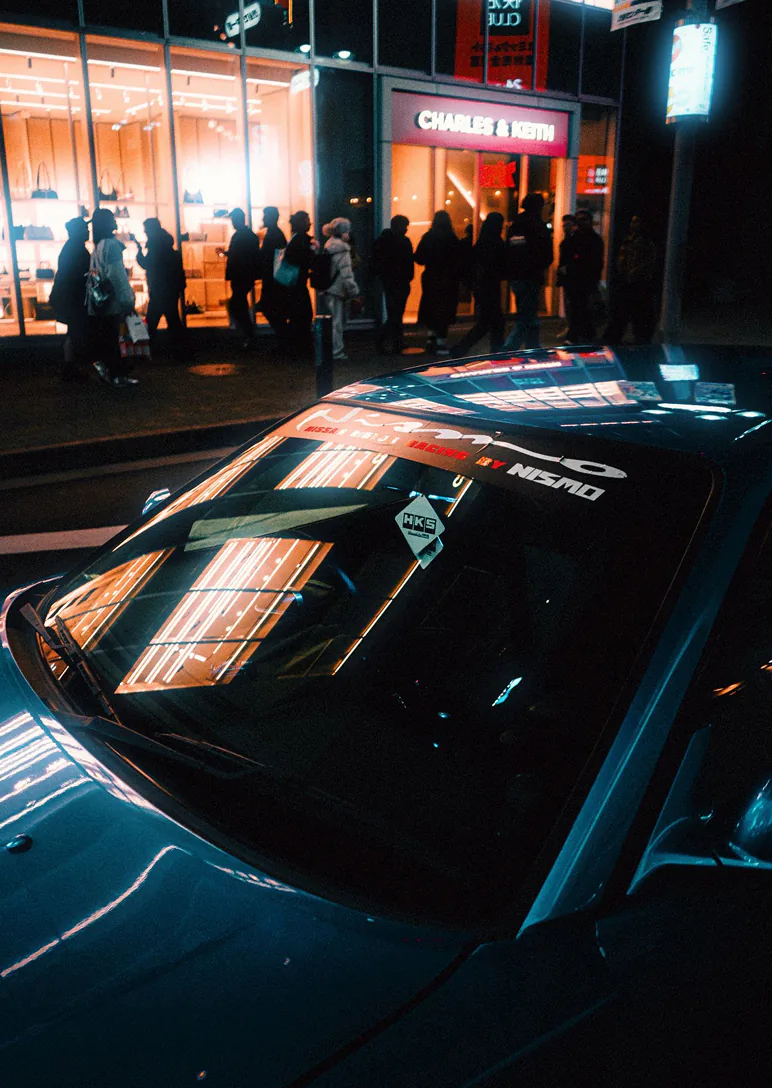
Why Group Size Is Everything
The defining variable in any group tour is how many people are in your group. The economics of tourism push operators toward larger groups - fixed costs spread across more customers means better margins. But larger groups fundamentally degrade the experience: less access, less flexibility, less personal attention, less ability to engage with what you're actually looking at.
The sweet spot for Tokyo group tours is 2-6 people. At this scale, a guide can manage the group as individuals, the itinerary can flex based on what's actually happening, and you're not moving through spaces at the pace of the slowest member of a twenty-person group.
When evaluating any Tokyo group tour, the first question to ask is: how many people are in the group? If the answer is more than eight, you're looking at a mass-market product regardless of how it's marketed.
What Small Group Tours Offer That Independent Travel Doesn't
Tokyo is very accessible as an independent traveller. The train system is excellent, English signage is widespread, Google Maps works perfectly and most tourist attractions are easily navigable without help.
What small group tours provide is not primarily navigation assistance - it's access to things that independent travel cannot reach.
Insider knowledge that changes the experience. A food tour guide who knows which counter in Tsukiji has been run by the same family since 1962, which is different from simply knowing that Tsukiji exists. A neighbourhood walking guide who explains why this particular alley exists, rather than walking past it.
Physical access to restricted experiences. Some of the best experiences in Tokyo require either a vehicle, specific contacts, or both. JDM car culture at Daikoku PA requires a car - the site is on a highway and there is no other way in. Certain traditional workshops are not open to unintroduced visitors. Some restaurant experiences require someone who speaks Japanese to navigate the booking process and the meal itself.
Flexibility and local knowledge on the ground. An experienced guide knows what to do when the plan changes. If Daikoku PA gets shut down by police, which happens regularly, a good guide doesn't end the tour, they redirect to wherever the scene has moved. If a food stall is closed, they know the alternative. This real-time adaptation is genuinely valuable.
The Best Small Group Tours in Tokyo
Night Food Tours - Shinjuku and Beyond
Shinjuku's eating and drinking culture is extraordinary but navigating it without guidance means defaulting to English-menu restaurants near the station. A good night food tour covers izakayas, yakitori specialists, standing sushi bars, ramen shops and the kind of venue that has no signage legible to non-Japanese speakers. Groups of 4-6 work well for these tours as restaurants can accommodate the group at a single table.
Neighbourhoods Off the Tourist Circuit
Shimokitazawa, Koenji and Kagurazaka are all accessible independently but come alive with local context. Shimokitazawa has vinyl records, independent coffee shops and live music venues. Koenji has vintage clothing, music and alternative culture. Kagurazaka is a former geisha district with French-Japanese fusion and hidden alleys.
Small group walking tours that cover the character of the neighbourhood rather than its landmarks produce the kind of understanding of Tokyo that takes months of residence to develop independently.
Sake and Whisky Experiences
Japan's whisky has become internationally celebrated, and Tokyo offers access to bars with collections of aged Japanese whisky that are unavailable outside the country. A guided whisky or sake experience with someone who understands the production, the regional variation and the specific bottles worth trying is an evening that justifies the entire trip for the right person. Groups work well at 2-4 people - small enough for a single table at a serious bar.
The JDM Night Tour - Tokyo's Most Unique Small Group Experience
For a specific type of traveller - car enthusiast, pop culture fan, anyone who watched Fast & Furious Tokyo Drift and wanted to be there, anyone who wants to give a partner the most memorable night of the trip - the JDM small group tour is Tokyo's most distinctive offering.
JDM Tokyo Tours runs groups of maximum 3 guests per car. This isn't a compromise - it's deliberate. Three people in the back of a modified GT-R heading to Daikoku PA is an experience. The same three people in a van with nine other tourists watching from a bus window is a different product entirely.
The tour covers Daikoku Parking Area, Tatsumi PA, and the Wangan Bayshore Route - the elevated highway along Tokyo Bay that appears in Wangan Midnight and whose real-life character at night fully justifies the fiction. The guide is an active participant in the local car scene, speaks English, and can provide context for everything you're seeing while making introductions to car owners at the venue.
What makes this tour genuinely small group: three guests maximum. One car. One guide. Your evening, not a scheduled itinerary that thirty other tourists are simultaneously experiencing.
Pricing: JPY 90,000 per car for up to 3 guests from Akihabara. Approximately $200 USD per person in a full group. Book via Instagram @jdmtokyotours.
How to Evaluate Any Tokyo Group Tour Before Booking
Check the maximum group size. Listed in the tour details - if it isn't listed, ask directly before booking.
Verify the guide's qualifications. For cultural tours, look for guides who are residents with genuine knowledge rather than tour operators who've studied a script. For specialist experiences - car culture, sake, martial arts - the guide should be an active practitioner, not someone with a laminated fact sheet.
Read reviews for flexibility. Look for reviews that mention what happened when something went wrong or changed: weather, closures, unexpected situations. How an operator handles disruption tells you more about quality than how they perform when everything goes according to plan.
Confirm what "group" means. Some tours advertise as "private" when they mean your booking is private - the guide may be running two private tours simultaneously at different points in the same location. Ask explicitly: will there be any other tourists on this tour?
Book early, especially for weekends. The best small group tours in Tokyo - particularly those with genuine capacity limits rather than manufactured scarcity - fill up. Weekend spots for the JDM night tour and popular food experiences can book out weeks in advance during peak season.
Group Tour Booking Tips for Tokyo
Cherry blossom season, late March to early April, is the peak period for Tokyo tourism. Book all tours at least 4-6 weeks in advance for this window.
Weekday availability is usually better than weekends and sometimes cheaper. If your schedule is flexible, Tuesday-Thursday produces the least competition for popular tours.
Many travellers in Tokyo book one significant cultural experience, one food experience and one unique specialist experience. The JDM night tour works well as the specialist component for travellers whose group includes at least one car enthusiast - and repeatedly surprises the non-enthusiasts who come along.
JDM Tokyo Tours offers Tokyo's best small group car culture experience. Maximum 3 guests per car. Akihabara, Tokyo. JPY 90,000 per car. Book via @jdmtokyotours on Instagram.